
Close
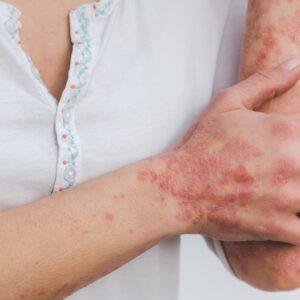 An itchy patch of skin can be easily labeled as dry skin, but if it brews into a thicker or scaly skin patch that comes back, it is worth having a second look.
While psoriasis can begin with mild symptoms, being able to identify the early symptoms means you are able to explain the reason for your skin’s behavior to your doctor.
In Singapore, understanding the difference between an itch and a perpetual skin complaint is essential step one to understanding your skin’s health.
Psoriasis is a condition that affects the immune system and the skin. The skin can produce cells rapidly and cause patches to form and become scaly.
Psoriasis spreads and occurs to future patches in people of all ages and demographics.
Some areas psoriasis commonly occurs include the elbows and knees, the scalp, the back, hands and feet, and nails.
Despite it being a chronic condition, the management of psoriasis helps improve the comfort of the patients and increases the quality of life.
Sometimes psoriasis can start out as dry skin, but it is also possible to confuse psoriasis with irritated or sensitive dry skin.
A psoriasis patch can start out as something that looks like dry skin and is rough or inflamed.
Unlike dry skin, psoriasis doesn’t go away. The skin gets thicker, scales become visible, and the patch keeps returning or the entire patch becomes inflamed and itchy.
Psoriasis is something that can be confused with many other skin conditions, like eczema, contact dermatitis, and fungal skin infections.
This is why it is important to evaluate the skin in order to determine the cause of the skin condition and any itching instead of self-diagnosing.
Common signs can include:
For some people, the symptoms may remain mild for a long time before becoming more obvious.
Simple dry skin may improve with regular moisturisation and appropriate skincare.
Psoriasis tends to have a more persistent inflammatory pattern.
| Dry Skin | Psoriasis |
|---|---|
| Often associated with weather or skin-barrier changes | Associated with immune-system activity and inflammation |
| Usually improves with moisturisation | May persist despite regular moisturisation |
| Often appears as general dryness or flaking | Can form raised, thicker patches |
| May improve when the trigger is removed | Can have recurring flare-ups |
| Usually does not form characteristic plaques | Can develop scaly plaques |
These differences can provide useful clues, but they cannot confirm a diagnosis on their own.
Psoriasis can develop at almost any age.
It may first appear during childhood, adolescence, young adulthood or later in life. There is no single age at which psoriasis starts.
For some people, the first noticeable symptom may simply be a small dry or scaly patch.
If a skin change persists, repeatedly returns or gradually changes in appearance, consider having it professionally evaluated.
It involves a combination of immune-system activity, genetic susceptibility and environmental factors.
Possible triggers or aggravating factors may include:
Triggers can vary significantly between individuals.
:max_bytes(150000):strip_icc()/VerywellHealth_TypesofPsoriasis_colorv1-2b61e1b6ecbe4fe699ffc08759208d26.png)
Psoriasis does not look the same in everyone. It can appear in different forms, affect different areas of the body, and range from a few small patches to more extensive skin involvement.
Understanding the different types of psoriasis can help you recognise symptoms and know when it may be appropriate to seek professional advice.
Plaque psoriasis is the most common type of psoriasis.
It typically appears as raised, inflamed patches of skin covered with dry, white or silvery scales. These patches are often found on the elbows, knees, scalp and lower back, although other areas can also be affected.
Symptoms may include:
Because plaque psoriasis can initially resemble ordinary dry skin, mild cases may sometimes go unnoticed.
Scalp psoriasis affects the skin of the scalp and may extend toward the hairline, forehead, neck or behind the ears.
It can cause:
One important difference is that scalp psoriasis can produce thicker, more defined patches than ordinary dandruff.
Guttate psoriasis often appears as numerous small, drop-shaped red or scaly spots.
It may develop relatively suddenly and is sometimes associated with an infection, particularly a recent throat infection.
It commonly affects the:
Guttate psoriasis can occur in children and younger adults, although it is not limited to these age groups.
Inverse psoriasis usually affects skin folds rather than the outer surfaces of the elbows or knees.
It may occur in areas such as:
Unlike plaque psoriasis, the affected areas may appear smooth, red and inflamed, with less visible scaling because of moisture and friction in these areas.
Pustular psoriasis is a less common form characterised by pus-filled bumps surrounded by inflamed skin.
It can affect a specific area, such as the hands and feet, or involve larger areas of the body.
Because pustular psoriasis can sometimes be associated with significant symptoms, medical assessment is important when these symptoms occur.
Erythrodermic psoriasis is a rare but potentially serious form of psoriasis in which large areas of the skin become intensely red, inflamed and may peel.
It can be associated with:
Erythrodermic psoriasis requires urgent medical attention.
Nail changes can sometimes occur alongside skin psoriasis, but they may also appear before obvious skin symptoms.
Currently, psoriasis has no permanent cure, but psoriasis can be properly controlled and cared for.
Management and treatment of psoriasis also depends upon the type and the severity of psoriasis, the areas involved, and the health of the individual.
The aim of treatment may be to also help control inflammation, itching, smooth out lesions of the skin, encourage skin health, reduce the recurrence of flare ups, and control psoriasis.
Those seeking treatment for psoriasis in Singapore have several options based on how they are experiencing symptoms and given their needs.
Dr Harshini Homeopathy Clinic includes psoriasis as part of the chronic skin disorders that are treated by homeopathic methods that are tailored to individual patients. Before a treatment is developed, the clinic will assess the patient’s symptoms, their case history, their lifestyle, and the patterns that are occurring and repeating.
The doctor also explains a system of care that goes beyond temporary symptom control. It includes an assessment, development of a care plan, and an evaluation of the progress made.
For patients interested in homeopathy treatment for psoriasis, Dr Harshini Clinic provides personalised homeopathic care for chronic and recurring skin conditions, including psoriasis.
The approach is based on understanding the individual’s symptom pattern and broader health history rather than assuming that every psoriasis case is the same.
Because psoriasis can vary significantly between individuals, treatment decisions should be made following an appropriate professional consultation.
Consider seeking professional advice if your skin symptoms:
The first signs may include persistent red, dry, raised or scaly patches. Some people initially experience only mild itching or irritation.
It can. Psoriasis may initially affect a small area before becoming more noticeable or appearing elsewhere.
Yes. Psoriasis can develop during childhood, adolescence, young adulthood or later in life.
A dry patch that is persistent, recurrent, raised, inflamed or noticeably scaly may require professional evaluation. Several other skin conditions can look similar, so self-diagnosis is not recommended.
No. Psoriasis is not contagious and cannot be spread through normal physical contact.
Psoriasis is considered a chronic condition. Symptoms can improve and periods of remission may occur, but flare-ups can return. Appropriate management can help control symptoms.
People in Singapore experiencing persistent or recurring psoriasis symptoms can seek professional assessment from a qualified healthcare practitioner. Dr Harshini Clinic in Singapore provides personalised homeopathic care for chronic skin conditions, including psoriasis.